
Appearance
8. A recall drill: one lot, every outlet
Back to the case study · Previous: 7. Dispatch to the outlets · Next: 9. Costs and reports
Every food business must be able to answer, fast: if this lot is unsafe, where did it come from, and where is it now? Spice Republic runs a drill every month. This one starts with a phone call.
An outlet manager reports that customers at two outlets complained about the chicken tikka from the 2 October pouches.
The pouch label says lot CHKTIK-261002: chicken tikka, made on 2 October.
8.1 Forward: where the lot went
Manufacturing > Lot Trace, item Chicken tikka, marinated, 1 kg pouch, lot CHKTIK-261002:
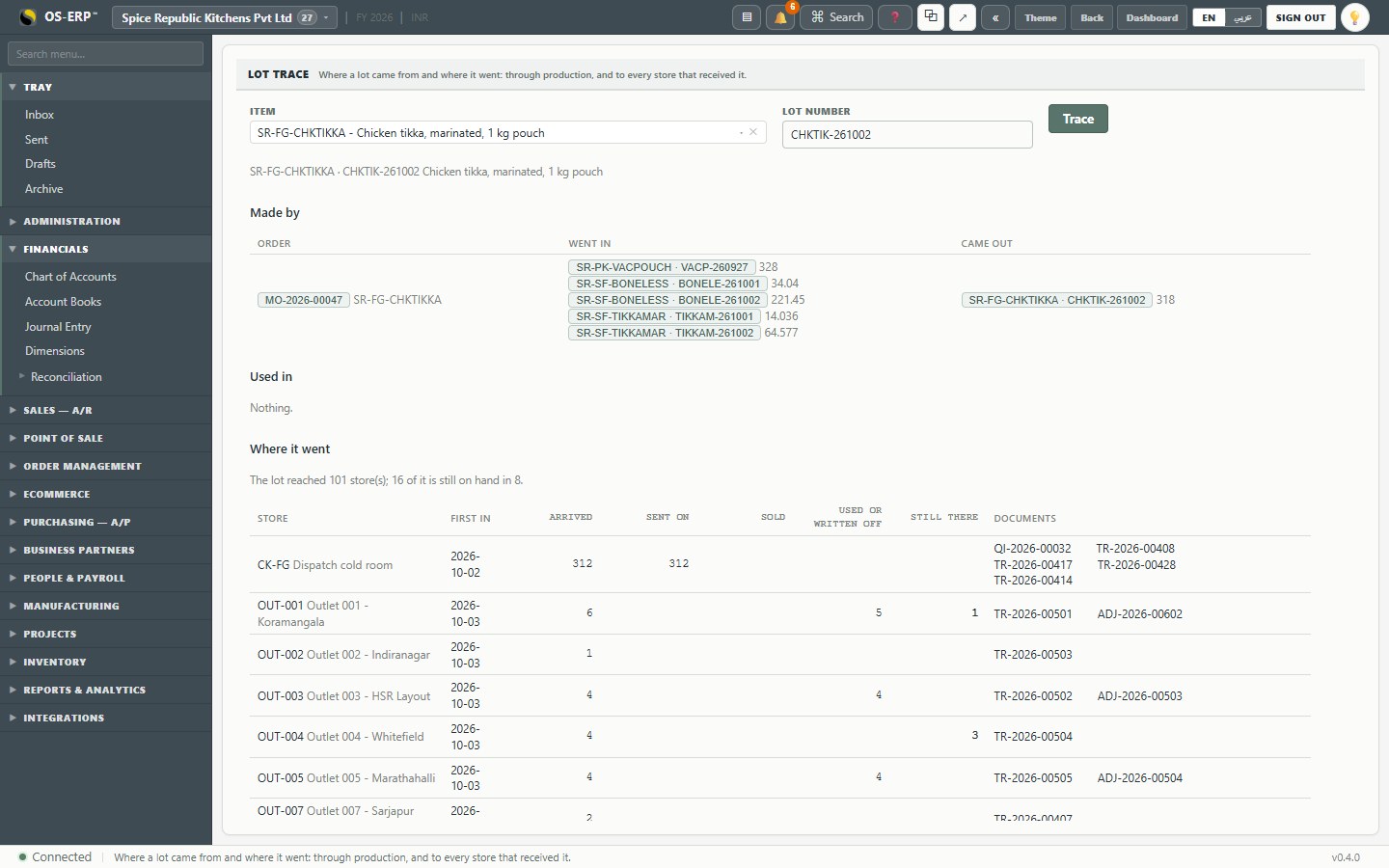
Made by shows the production order that made it, and exactly which lots went in: boneless chicken from two deboning runs, tikka marinade from two batches, and one lot of pouches. 318 pouches came out.
Below it, Where it went lists every store the lot reached:
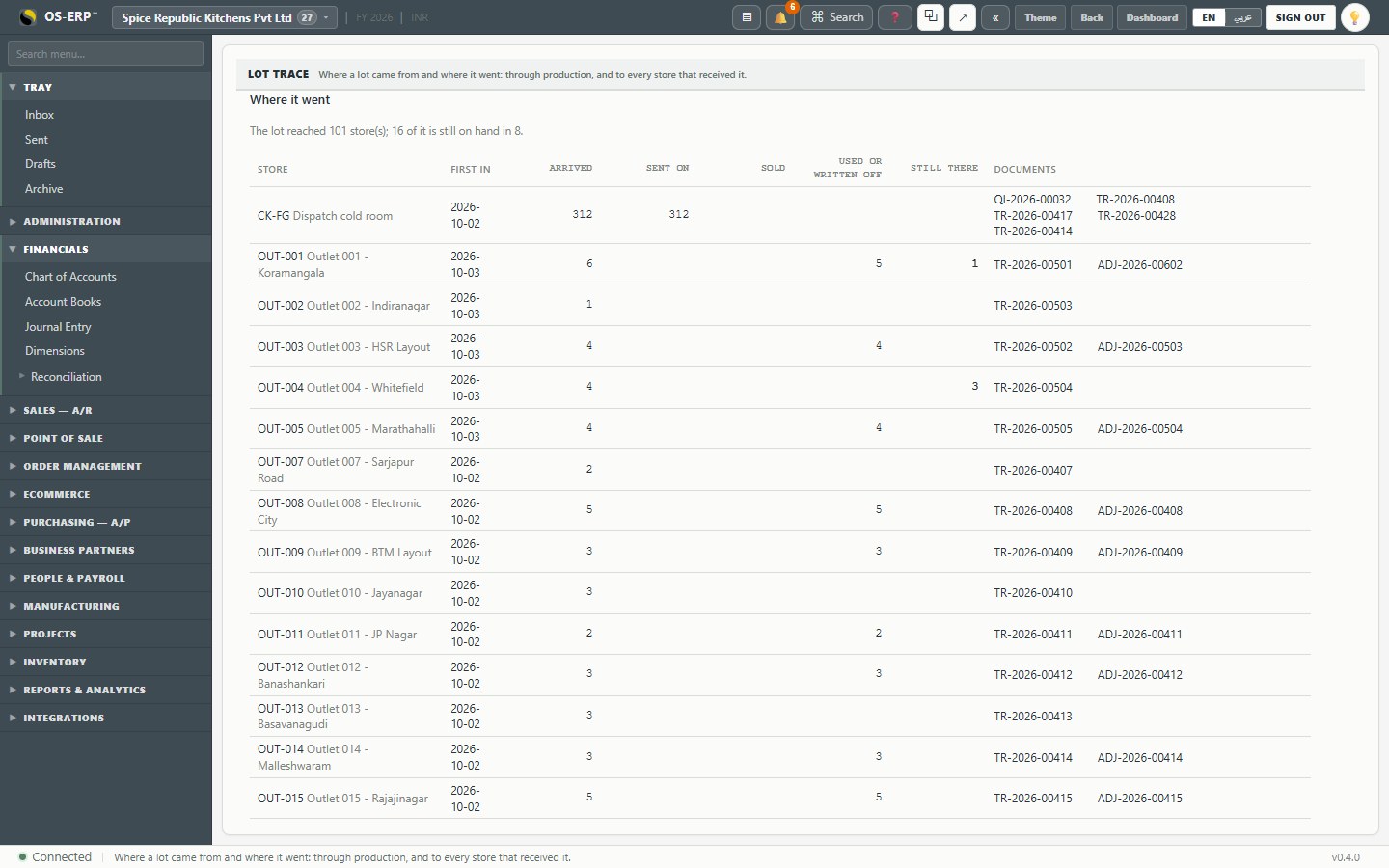
| Column | Meaning |
|---|---|
| First in | When the lot first arrived in that store |
| Arrived | How much arrived |
| Sent on | How much left again for another store (the cold room sent it all to outlets) |
| Sold | Sold at that store's till |
| Used or written off | Used in the outlet kitchen, or written off (the six pouches that failed the seal check in chapter 5) |
| Still there | What is on that store's shelf now, in bold |
| Documents | The transfers and usage records, each one opening the document |
The line above the table answers the recall question in one sentence: the lot reached 101 stores; 16 pouches of it are still on hand in 8 of them. The area managers call those 8 outlets, the 16 pouches are pulled, and the drill is done. Nobody phones 100 outlets.
8.2 Backward: what it was made from
Each lot under Went in is a button. Following the boneless chicken back leads to the deboning order, and from there to the whole chicken. This is the lot from the evening of 30 September, the delivery with the warm crates:
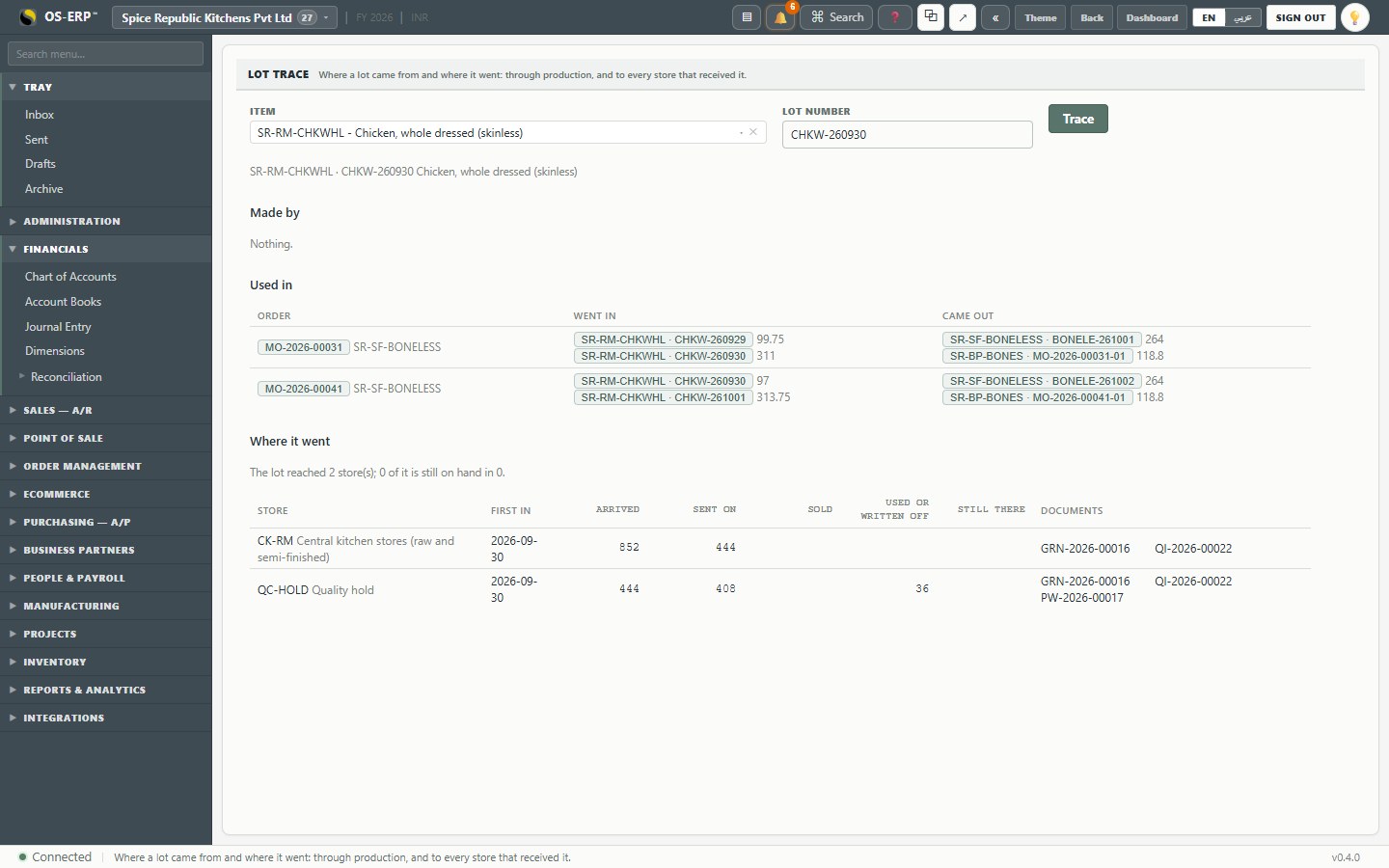
- Used in: two deboning orders, each with the boneless chicken lot and the bones it made.
- Where it went: 444 kg arrived from the farm and went straight to QC-HOLD. 408 kg were accepted and moved to the kitchen stores; 36 kg were refused at 9 C and went back to the farm on the purchase return (the PW document).
From a complaint at an outlet to the farm's delivery note and back out to every outlet: two screens, a few seconds.
8.3 What makes this possible
Nothing here was entered for the recall. It falls out of the ordinary work:
- Every receipt from a supplier carries its lot and use-by date.
- Every production order records which lots it used and which it made.
- Every transfer records the lots that left and arrived, at their cost, lot by lot.
- Every outlet issue records the lots it used.
If any of these is skipped, the chain breaks at that point. That is why OSERP picks lots automatically (first expiry first out) instead of asking people to type them.