
Appearance
7. Dispatch: a hundred outlets every morning
Back to the case study · Previous: 6. The dough line and OEE · Next: 8. A recall drill
7.1 One transfer per outlet
At 6 am the vans load. Each outlet's indent becomes a stock transfer from the dispatch cold room to that outlet's store. Inventory > Transfers:
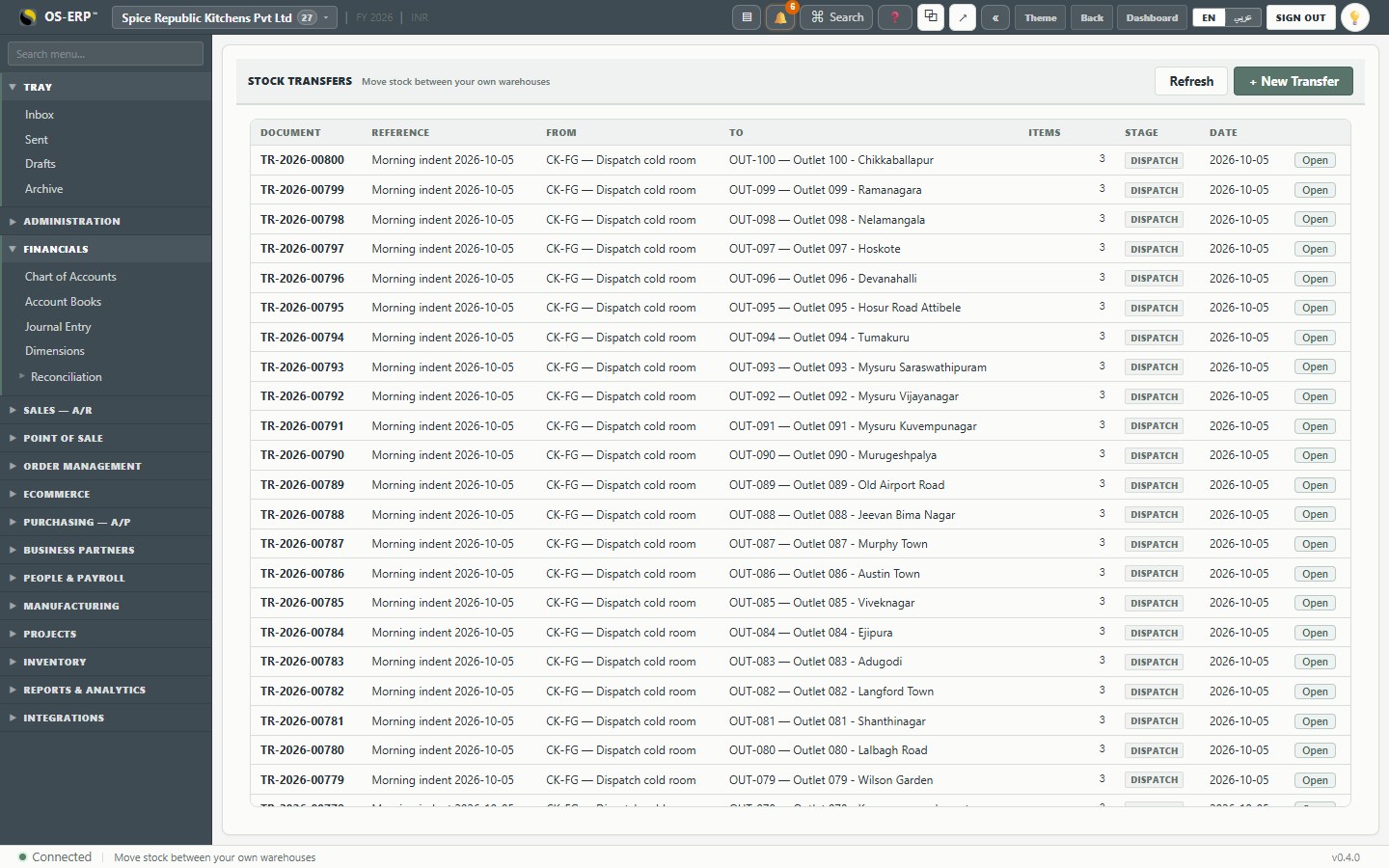
Six packs a day to 100 outlets is 600 transfer lines every morning, 4,200 in this week alone. The bigger outlets (every seventh) take half as much again; the small ones half as much.
A transfer has two stages that matter, and they are separate on purpose:
| Stage | What happens | Journal |
|---|---|---|
| Dispatch | The packs leave the cold room. FEFO picks the lots with the nearest use-by date | Dr Stock in Transit / Cr Inventory (cold room) |
| Receipt | The outlet manager confirms what arrived | Dr Inventory (outlet) / Cr Stock in Transit |
Between the two, the food is on a van. It is not in the kitchen and not yet in the outlet, and somebody is responsible for it.
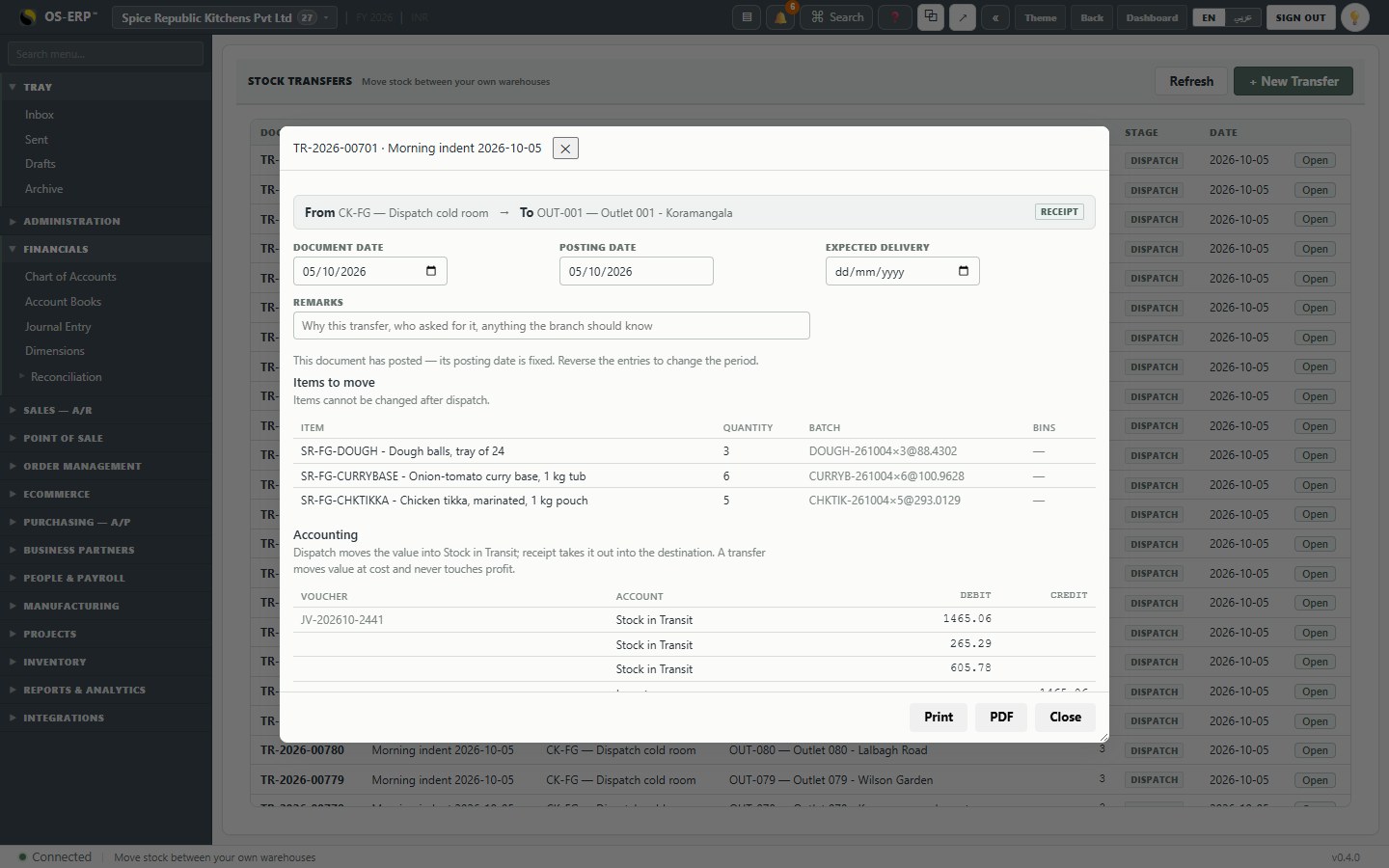
The receipt rebuilds the same lots at the cost they left at. A transfer moves value; it never creates it. If an outlet receives 5 pouches of 6, it says so, and the missing one goes to Transfer variance, visible, instead of quietly disappearing.
7.2 What is on the road right now
At the time of the screenshots, 70 outlets have received this morning's van and 30 are still on the road. Inventory > Stock in Transit:
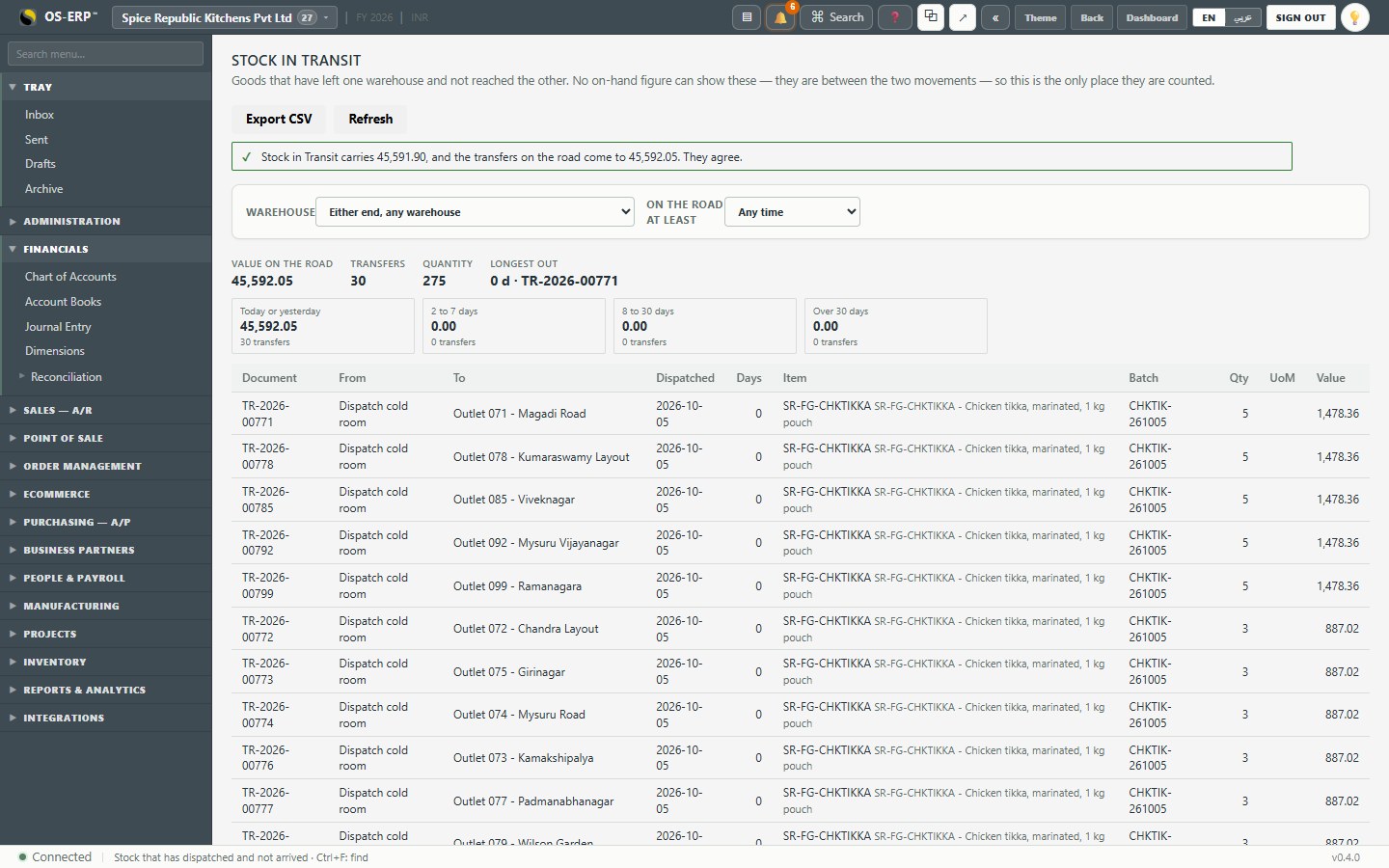
The green line at the top is a check: the Stock in Transit account in the books carries exactly what the open transfers add up to. Every row is a lot on a van, with how many days it has been out. A transfer still open after a day means a van that never reported, and that is where the logistics manager looks first.
7.3 What the outlets used
Each outlet records at closing what its kitchen used, as a stock issue from its own store. Most outlets use everything they received; some keep a few packs back for the morning rush. Because each outlet is a store, the company always knows:
- what each outlet holds, lot by lot, with use-by dates;
- what each outlet consumed, at the true cost of the packs (including the central kitchen's labour and gas);
- which outlets keep stock longest. In the recall drill in the next chapter, that is exactly the list of outlets to call.