
Appearance
6. The dough line and OEE
Back to the case study · Previous: 5. Quality · Next: 7. Dispatch to the outlets
6.1 Some things are made at a rate, not in batches
Dough balls are the same every day: about 200 trays of 24, for roti and naan at the outlets. Raising a production order every night for the same thing is paperwork for nothing. From this week Kavya moved the dough line to repetitive production.
Manufacturing > Repetitive > Rate schedules:
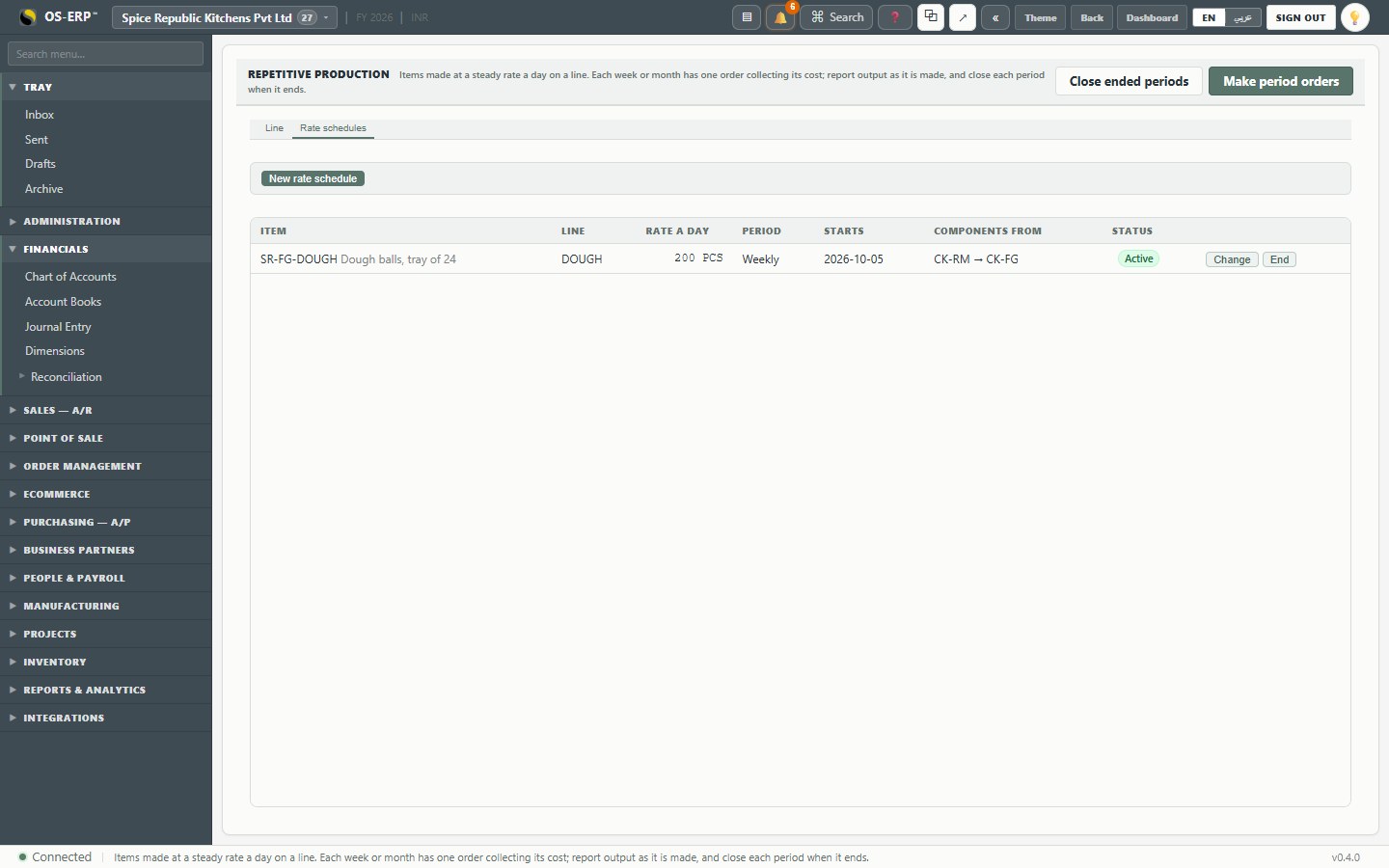
| Field | Value |
|---|---|
| Item | Dough balls, tray of 24 |
| Line (work centre) | DOUGH |
| Rate a day | 200 trays |
| Period | Week |
| From / into | Kitchen stores to the dispatch cold room |
Make period orders creates one production order a week, for the rate times the line's working days (200 x 7 = 1,400), released, issued by backflush. It collects the week's cost; output is reported against it as it is made.
6.2 The line board
Repetitive > Line is what the dough line operator sees:
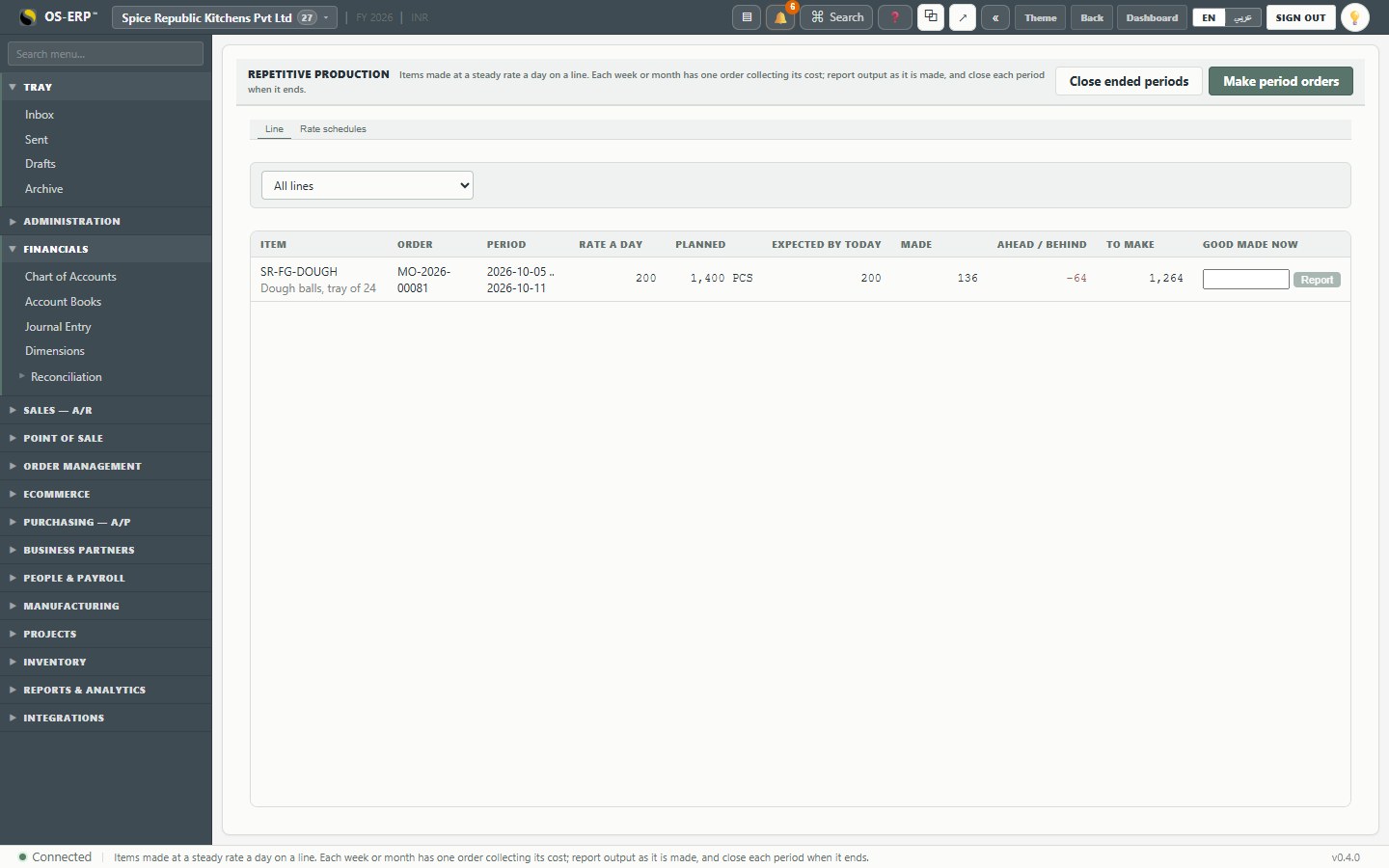
| Column | Meaning |
|---|---|
| Expected by today | The rate times the working days so far |
| Made | Output reported this period |
| Ahead / behind | Made less expected: today the line is 64 trays behind, because the second shift has not reported yet |
| Good made now | The operator types the trays just made and presses Report |
Each report backflushes the flour, oil, salt and trays and books the line's planned time, so the week's order carries its cost as it goes. Close ended periods closes each week when it ends and settles its cost, week by week.
6.3 OEE: how much of each station's time became good food
Manufacturing > OEE:
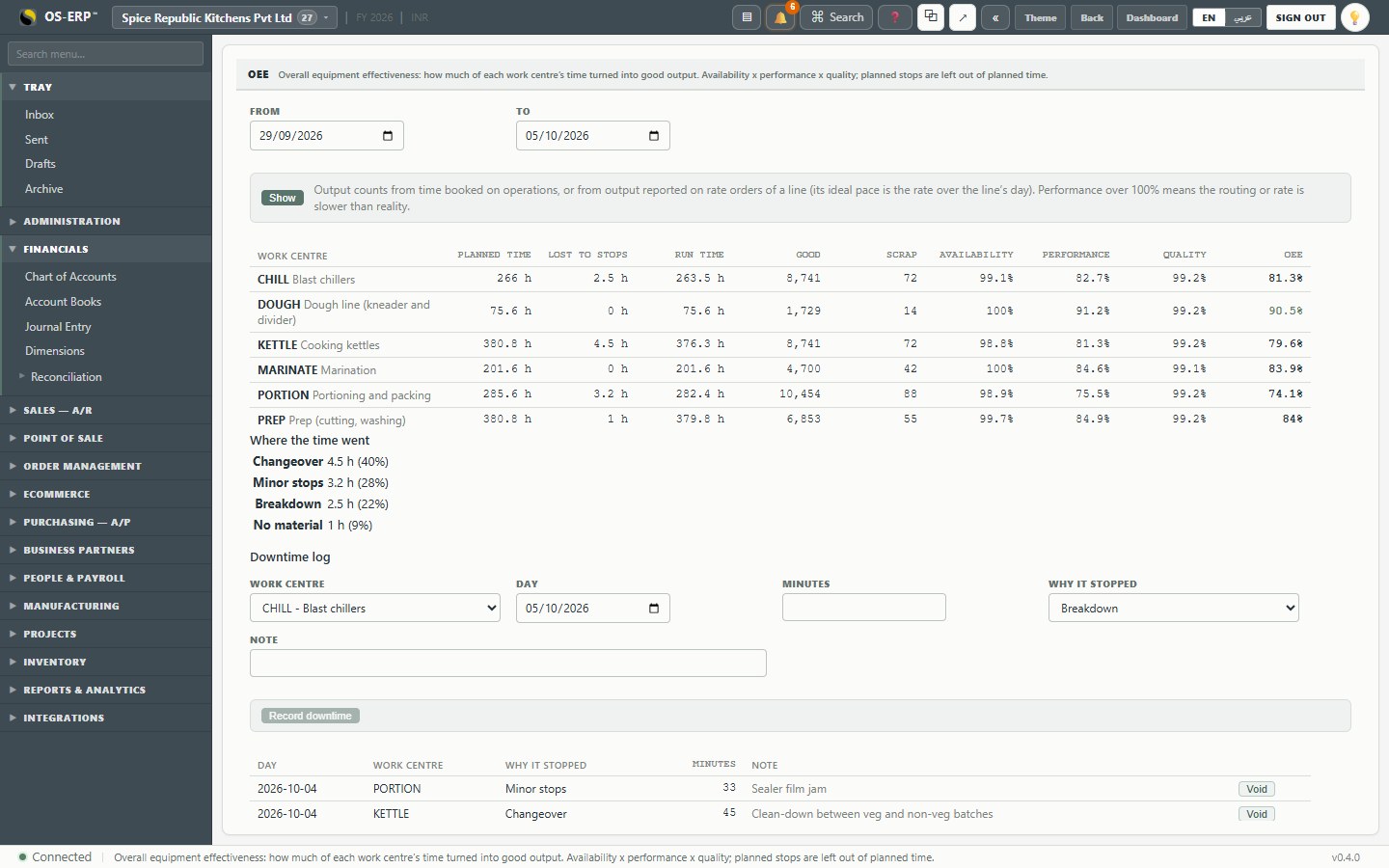
OEE (overall equipment effectiveness) is three numbers multiplied:
| Formula | Kettles this week | |
|---|---|---|
| Availability | run time / planned time (time lost to breakdowns and stops comes off) | 98.8% |
| Performance | the time the output should have taken at the routing's speed / run time | 81.3% |
| Quality | good / (good + scrap) | 99.2% |
| OEE | availability x performance x quality | 79.6% |
Planned stops (maintenance, agreed breaks) are taken out of planned time, so they do not count against the station.
Below the table, Where the time went ranks the downtime reasons for the period:
| Reason | Hours | Share |
|---|---|---|
| Changeover (kettle clean-down between veg and non-veg) | 4.5 | 40% |
| Minor stops (sealer film jams on the packing line) | 3.2 | 28% |
| Breakdown (blast chiller 2 compressor tripped) | 2.5 | 22% |
| No material (poultry van an hour late) | 1 | 9% |
Record downtime logs a stop: station, day, minutes, reason and a note. The shift lead does it at the end of the shift.
What Spice Republic did with it
Changeovers are the biggest loss. The kettles are cleaned between vegetarian and non-vegetarian batches every night. The fix costs nothing: cook all the vegetarian bases first, then the non-vegetarian ones, and clean once. On the scheduling board (chapter 3) that is a change of priority, not a new kettle.