
Appearance
5. Quality: nothing leaves without a check
Back to the case study · Previous: 4. The night shift · Next: 6. The dough line and OEE
In a kitchen, quality is food safety. Two checks matter most: chilled goods must arrive cold, and cooked food must be cooked through and then chilled fast. In OSERP both are holds: the goods physically exist, but sit in a store of their own, QC-HOLD, where nothing can be issued to production, sold or sent to an outlet until somebody decides.
5.1 Quality plans: what is checked on which item
Manufacturing > Quality > Quality plans:
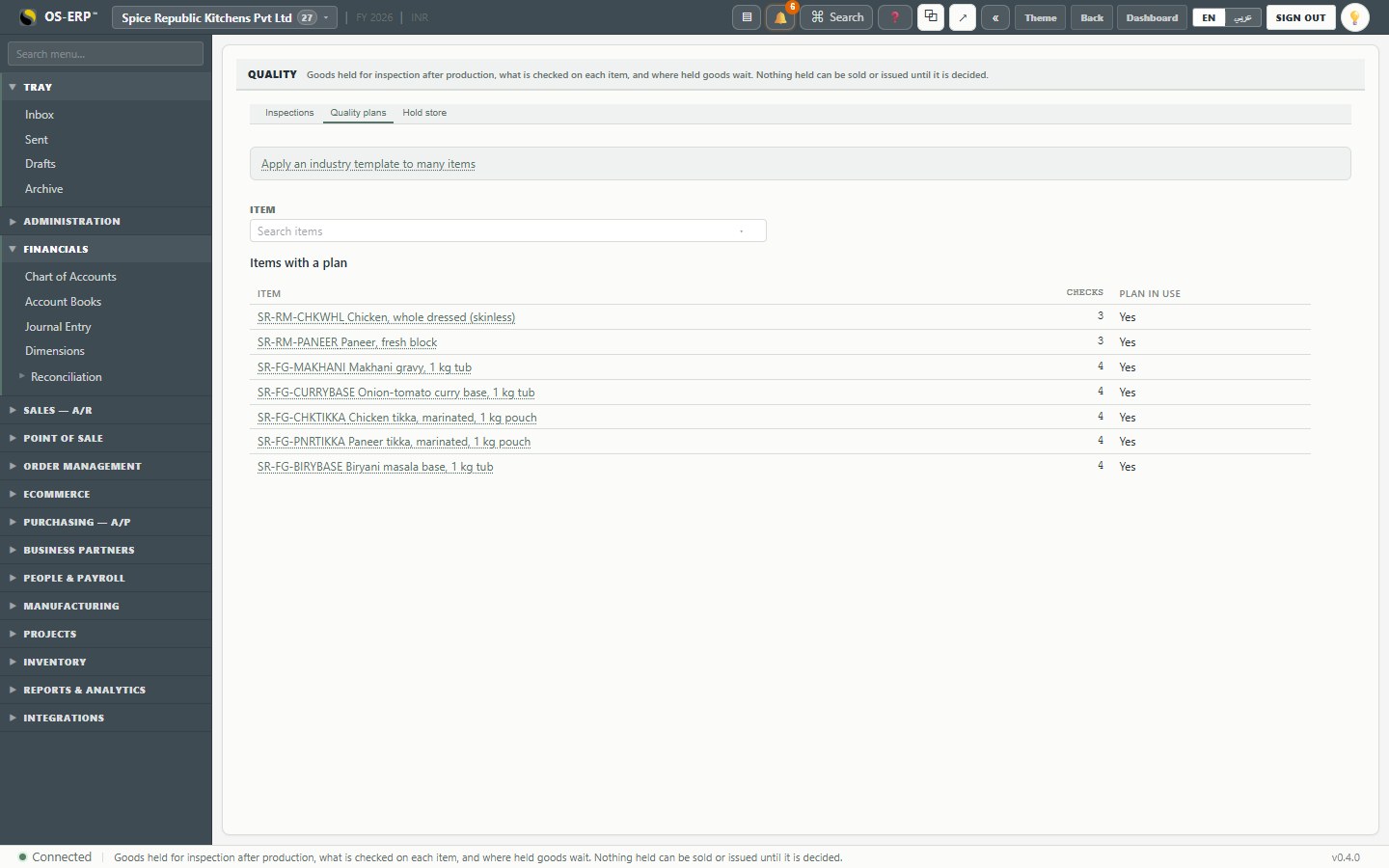
The Central kitchen pack's templates were applied in one go:
| Plan | Applies to | When | Checks |
|---|---|---|---|
| Cooked and chilled | Makhani tub, curry base tub, biryani base tub, chicken and paneer tikka | On production | Core temperature at cooking (at least 75 C) · Temperature after blast chill (at most 5 C) · Taste, colour and consistency · Label with batch and use-by |
| Meat, dairy and produce (incoming) | Whole chicken, paneer | On receipt | Temperature on arrival (at most 5 C) · Smell, colour and texture normal · Licence number and dates on pack |
A number check has limits and passes or fails by itself; a check is a tick.
5.2 At the door: incoming inspection
The poultry farm delivers every evening. The purchase order is received in OSERP (goods receipt), and because whole chicken has an incoming plan, the whole lot goes straight to QC-HOLD and an inspection opens.
On the evening of the third night of this case study, the farm's van chiller had failed. The food safety officer probed the crates: the first ones were fine, the last four were at 9 C. In the inspection she entered the temperature, accepted the rest and rejected 36 kg, with the reason:
Last 4 crates at 9 C on arrival: refused, back to the farm on the purchase return
What OSERP did with that decision:
- The accepted chicken moved from QC-HOLD to the kitchen stores, ready for the night shift.
- The rejected 36 kg stayed out of the kitchen and went onto a purchase return to the farm, so the farm's bill is reduced instead of the kitchen writing the chicken off.
- The night shift deboned only what was accepted, and the next planning run saw 36 kg less chicken in stock and asked for it on the next delivery.
5.3 After cooking: the hold on cooked food
Every cooked pack reported on a production order goes to QC-HOLD with an inspection, never straight to the dispatch cold room:
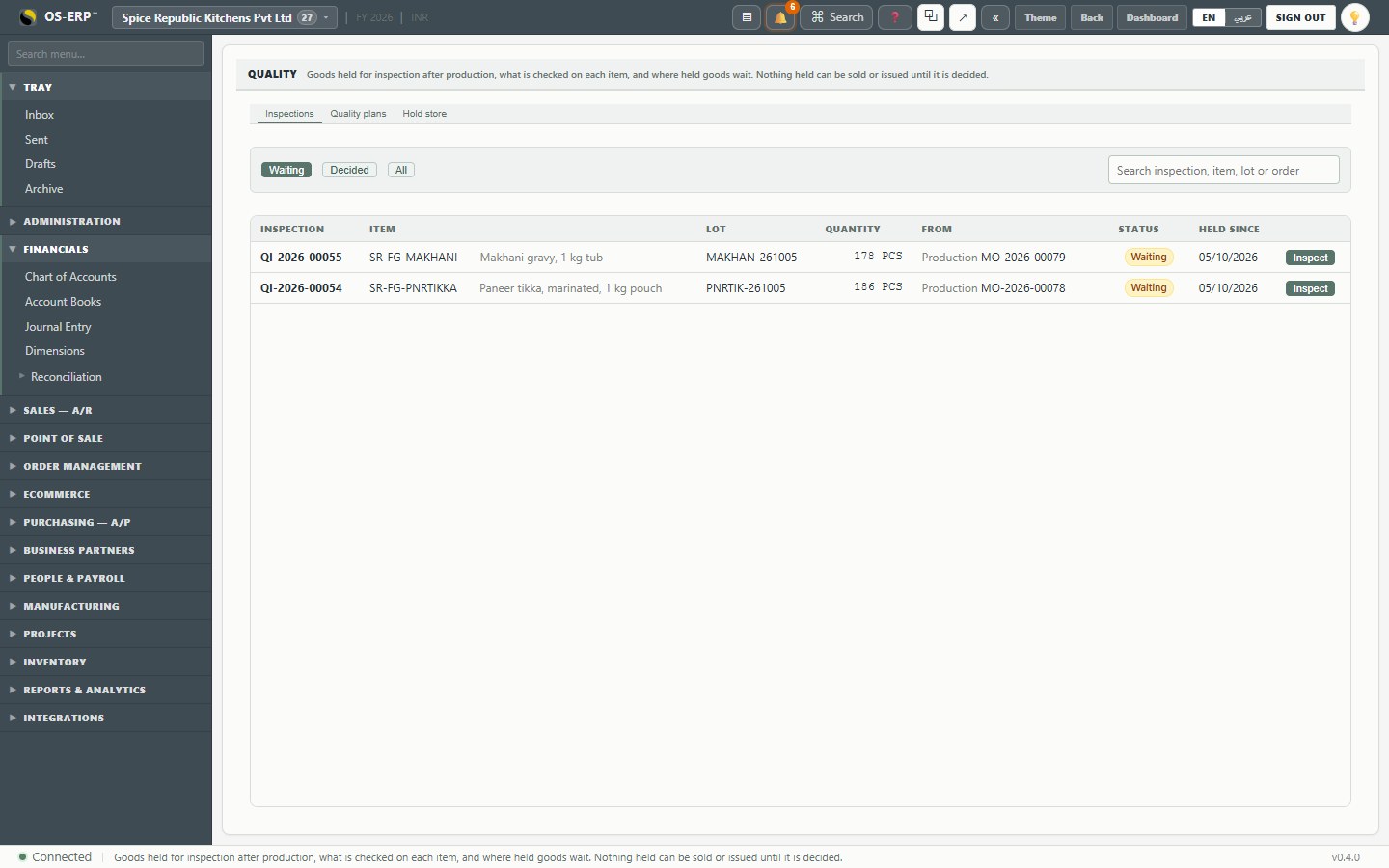
At the time of the screenshots two lots are waiting: tonight's makhani gravy (178 tubs reported so far) and paneer tikka (186 pouches). Inspect opens the decision:
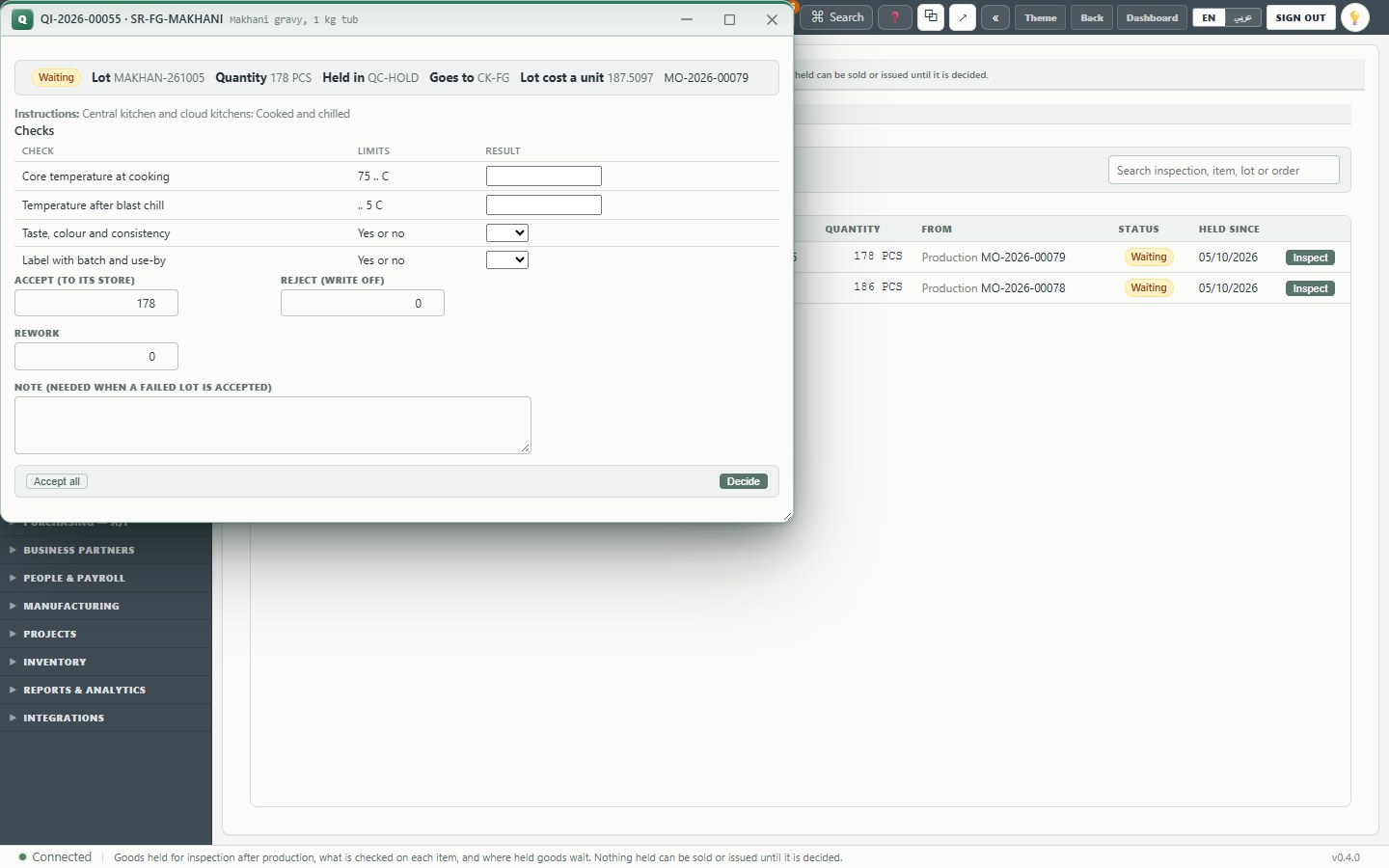
The officer enters the probe readings and ticks the checks. Each line says pass or fail against its limits. Then the decision, in quantities:
- Accepted moves to the order's destination store (the dispatch cold room).
- Rejected is written off (cooked food cannot be returned to anyone), at its cost, with a reason.
- Rework goes onto a rework order.
- A decision that overrides a failed check needs a note, so the record says who released what, and why.
On the fourth night, six chicken tikka pouches failed the seal check. They were rejected, the other 312 went to the cold room, and the lot trace (chapter 8) still shows the full story: 318 made, 312 released.
5.4 The record
Decided lists every inspection, incoming and production:
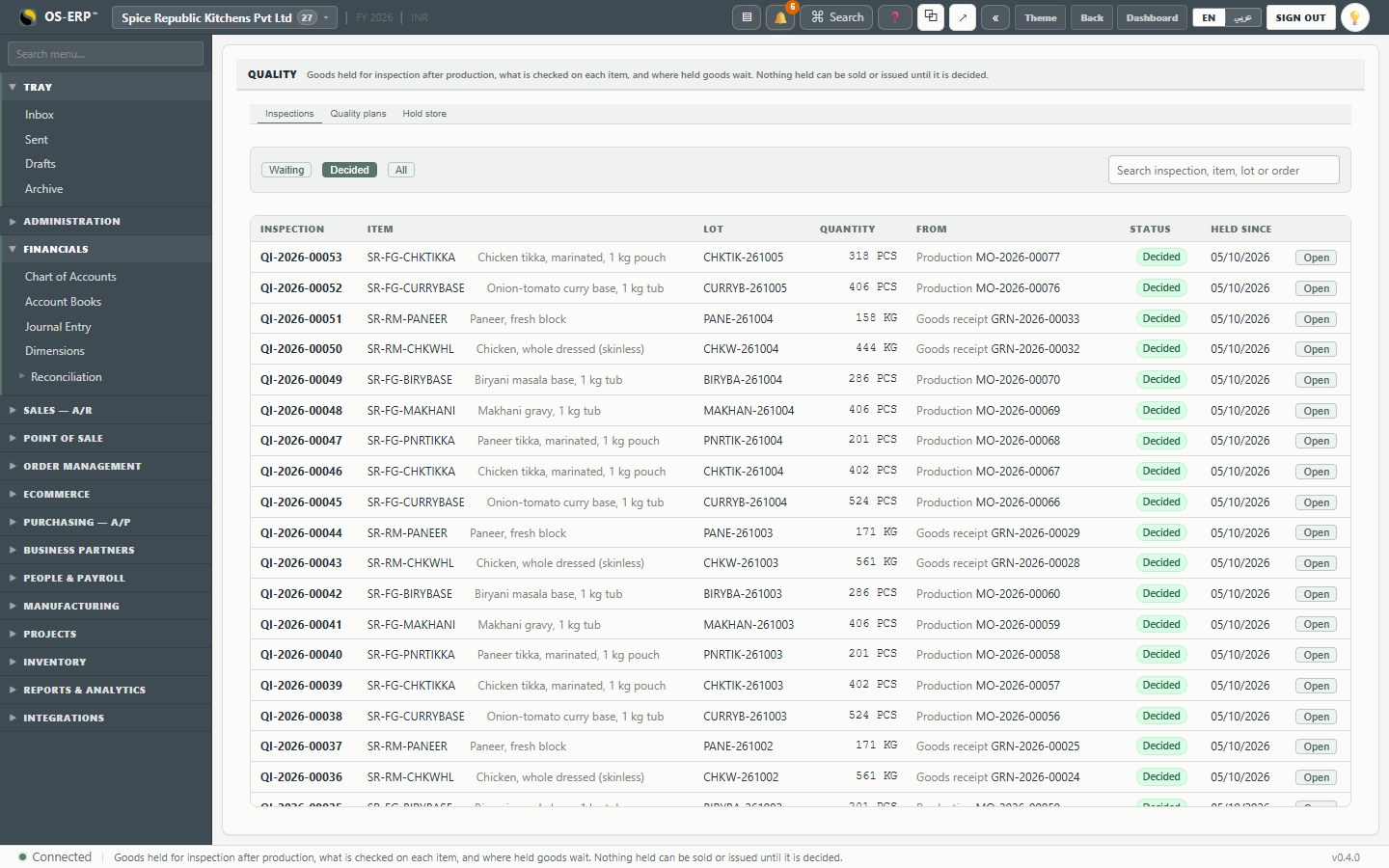
Each row names the lot, its source (a goods receipt or a production order) and opens the readings. When the food safety inspector visits, this is the log: every lot, its temperatures, who decided, when.